»Wir werden«, so Klingbeil in einer offenbar lange vorbereiteten Rede am 25. März, »als Gesellschaft mehr arbeiten müssen«.
😀

»Wir werden«, so Klingbeil in einer offenbar lange vorbereiteten Rede am 25. März, »als Gesellschaft mehr arbeiten müssen«.
😀
Meinungsfreiheit ist eine zentrale Säule für die pluralistische Demokratie. Berit Kessler/Imago
„Das Menschenbild des Grundgesetzes geht im Anschluss an Humanismus, Aufklärung und Liberalismus von mündigen, eigenverantwortlich handelnden Staatsbürgern aus.Diese begegnen einander in analogen und digitalen Foren in einem argumentativ, mitunter auch polemisch ausgetragenen, pluralen Meinungswettstreit. Meinungsfreiheit bedeutet die Freiheit, gerade auch im öffentlichen Gespräch Themen zu erkunden, Sachverhalte zu erkennen oder sich bei alledem zu irren, und zwar ohne Angst vor Sozialstrafen aller Art. Für die freiheitliche demokratische Grundordnung ist – so das Bundesverfassungsgericht im Jahr 1958 – die Meinungsfreiheit „schlechthin konstituierend“.
Bis heute hebt das Gericht den zentralen Stellenwert der Meinungsfreiheit für die pluralistische Demokratie hervor. Dieser Grundpfeiler der Demokratie steht massiv unter Druck, und mit ihm die pluralistische Demokratie in Gänze.
„Das Menschenbild des Grundgesetzes”? Who the fuck cares about the German Grundgesetz? Certainly not the Germans I work with. Apparently not the Merz Regierung. The idea that Americans or their government care about the German constitution is beyond laughable. This stuff is well-meaning, but it seems like learned scholars remarking on the character of the flames devouring the walls of the room burning around them.
The Bush Sr. Library has some pretty cool stuff, to be honest, on Iraq, Ukraine, the DDR.
On 28 February, Bush declared victory. The BBC reported that the Western allies had lost 148 soldiers in battle, and 145 more from other causes. The number of Iraqi soldiers killed by aerial bombardment and the ground war was estimated at between 60,000 and 200,000. American media at the time, mindful of the Vietnam syndrome, downplayed human casualties and focused on destroyed Iraqi equipment and burning oil wells. “Nobody knows,” the BBC wrote, “how many civilians died in the war, but estimates for civilian deaths as a direct result of the war range from 100,000 to 200,000.” In contrast to the fourteen civilians in Lithuania, the West largely ignored these huge numbers of casualties.
—Vladislav M. Zubok, Collapse: The Fall of the Soviet Union, (Yale University Press, 2022), 196.


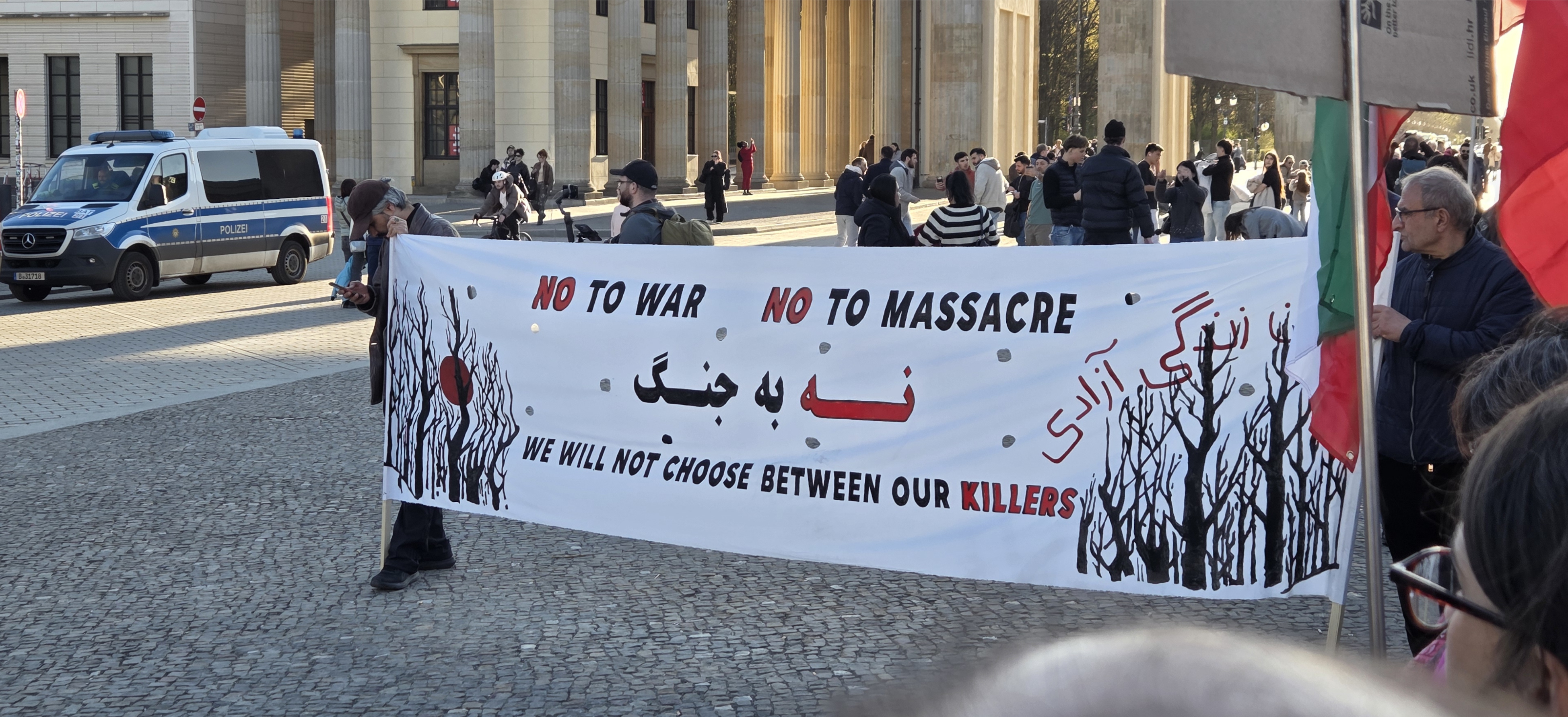
“Dieser Krieg muss sofort gestoppt werden!”
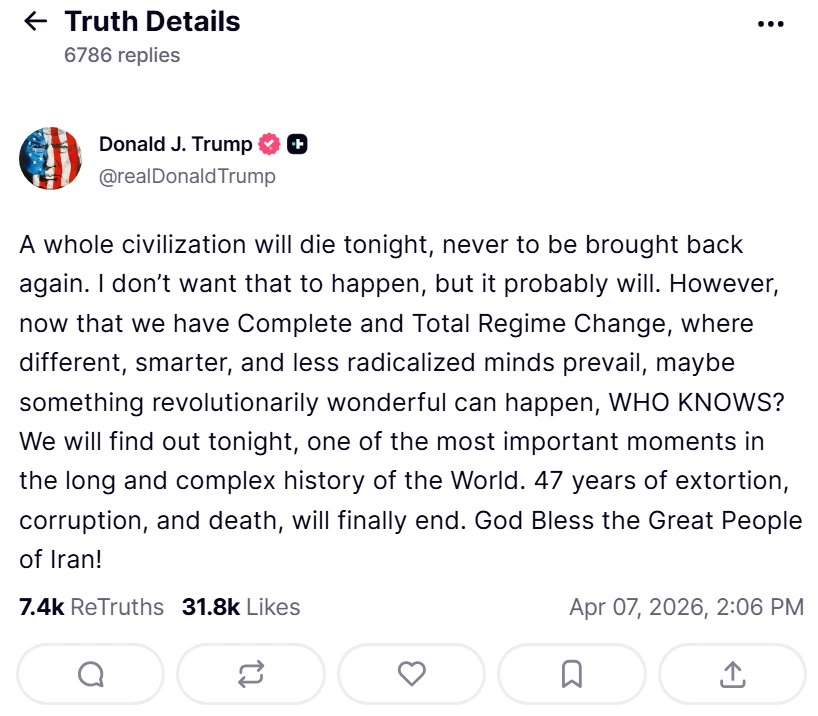
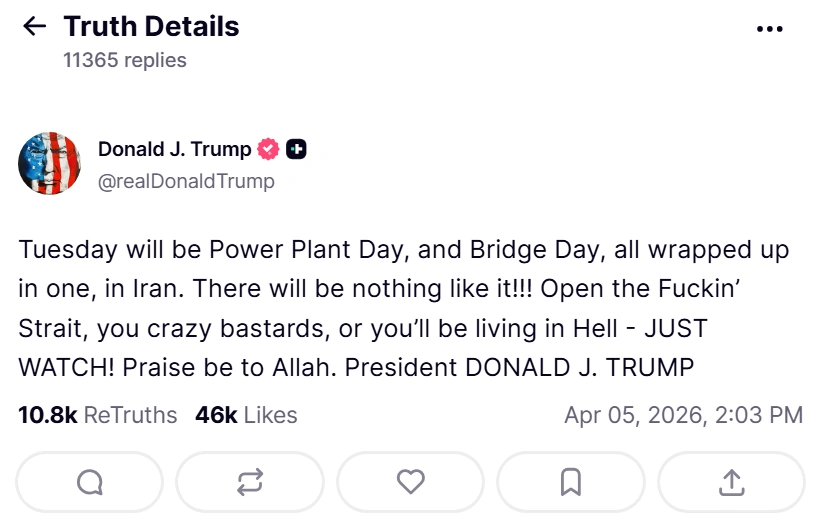
This seems pretty much Sith-level stuff. Are there any limits to what Americans will go along with? I mean even in theory? 🤔
I am drawn to the ways in which classical poets and artists dealt with this question. We are told Odysseus suffered great torment and struggled to join the sirens with all the strength he had. How might he have conditioned himself such that he might have remained untied, ears open, sane?

Martin Luther King, April 4, 1967:
Now, it should be incandescently clear that no one who has any concern for the integrity and life of America today can ignore the present war. If America’s soul becomes totally poisoned, part of the autopsy must read: Vietnam. It can never be saved so long as it destroys the deepest hopes of men the world over. So it is that those of us who are yet determined that America will be — are — are led down the path of protest and dissent, working for the health of our land.
Ω Ω Ω
And as I ponder the madness of Vietnam and search within myself for ways to understand and respond in compassion, my mind goes constantly to the people of that peninsula. I speak now not of the soldiers of each side, not of the ideologies of the Liberation Front, not of the junta in Saigon, but simply of the people who have been living under the curse of war for almost three continuous decades now. I think of them, too, because it is clear to me that there will be no meaningful solution there until some attempt is made to know them and hear their broken cries.
They must see Americans as strange liberators. The Vietnamese people proclaimed their own independence in 1954 — in 1945 rather — after a combined French and Japanese occupation and before the communist revolution in China. They were led by Ho Chi Minh. Even though they quoted the American Declaration of Independence in their own document of freedom, we refused to recognize them. Instead, we decided to support France in its reconquest of her former colony. Our government felt then that the Vietnamese people were not ready for independence, and we again fell victim to the deadly Western arrogance that has poisoned the international atmosphere for so long. With that tragic decision we rejected a revolutionary government seeking self-determination and a government that had been established not by China — for whom the Vietnamese have no great love — but by clearly indigenous forces that included some communists. For the peasants this new government meant real land reform, one of the most important needs in their lives.
For nine years following 1945 we denied the people of Vietnam the right of independence. For nine years we vigorously supported the French in their abortive effort to recolonize Vietnam. Before the end of the war we were meeting eighty percent of the French war costs. Even before the French were defeated at Dien Bien Phu, they began to despair of their reckless action, but we did not. We encouraged them with our huge financial and military supplies to continue the war even after they had lost the will. Soon we would be paying almost the full costs of this tragic attempt at recolonization.
After the French were defeated, it looked as if independence and land reform would come again through the Geneva Agreement. But instead there came the United States, determined that Ho should not unify the temporarily divided nation, and the peasants watched again as we supported one of the most vicious modern dictators, our chosen man, Premier Diem. The peasants watched and cringed as Diem ruthlessly rooted out all opposition, supported their extortionist landlords, and refused even to discuss reunification with the North. The peasants watched as all this was presided over by United States’ influence and then by increasing numbers of United States troops who came to help quell the insurgency that Diem’s methods had aroused. When Diem was overthrown they may have been happy, but the long line of military dictators seemed to offer no real change, especially in terms of their need for land and peace.
The only change came from America, as we increased our troop commitments in support of governments which were singularly corrupt, inept, and without popular support. All the while the people read our leaflets and received the regular promises of peace and democracy and land reform. Now they languish under our bombs and consider us, not their fellow Vietnamese, the real enemy. They move sadly and apathetically as we herd them off the land of their fathers into concentration camps where minimal social needs are rarely met. They know they must move on or be destroyed by our bombs.
So they go, primarily women and children and the aged. They watch as we poison their water, as we kill a million acres of their crops. They must weep as the bulldozers roar through their areas preparing to destroy the precious trees. They wander into the hospitals with at least twenty casualties from American firepower for one Vietcong-inflicted injury. So far we may have killed a million of them, mostly children. They wander into the towns and see thousands of the children, homeless, without clothes, running in packs on the streets like animals. They see the children degraded by our soldiers as they beg for food. They see the children selling their sisters to our soldiers, soliciting for their mothers.
What do the peasants think as we ally ourselves with the landlords and as we refuse to put any action into our many words concerning land reform? What do they think as we test out our latest weapons on them, just as the Germans tested out new medicine and new tortures in the concentration camps of Europe? Where are the roots of the independent Vietnam we claim to be building? Is it among these voiceless ones?
We have destroyed their two most cherished institutions: the family and the village. We have destroyed their land and their crops. We have cooperated in the crushing — in the crushing of the nation’s only non-Communist revolutionary political force, the unified Buddhist Church. We have supported the enemies of the peasants of Saigon. We have corrupted their women and children and killed their men.
Now there is little left to build on, save bitterness. Soon, the only solid — solid physical foundations remaining will be found at our military bases and in the concrete of the concentration camps we call “fortified hamlets.” The peasants may well wonder if we plan to build our new Vietnam on such grounds as these. Could we blame them for such thoughts? We must speak for them and raise the questions they cannot raise. These, too, are our brothers.
Perhaps a more difficult but no less necessary task is to speak for those who have been designated as our enemies. What of the National Liberation Front, that strangely anonymous group we call “VC” or “communists”? What must they think of the United States of America when they realize that we permitted the repression and cruelty of Diem, which helped to bring them into being as a resistance group in the South? What do they think of our condoning the violence which led to their own taking up of arms? How can they believe in our integrity when now we speak of “aggression from the North” as if there were nothing more essential to the war? How can they trust us when now we charge them with violence after the murderous reign of Diem and charge them with violence while we pour every new weapon of death into their land? Surely we must understand their feelings, even if we do not condone their actions. Surely we must see that the men we supported pressed them to their violence. Surely we must see that our own computerized plans of destruction simply dwarf their greatest acts.
How do they judge us when our officials know that their membership is less than twenty-five percent communist, and yet insist on giving them the blanket name? What must they be thinking when they know that we are aware of their control of major sections of Vietnam, and yet we appear ready to allow national elections in which this highly organized political parallel government will not have a part? They ask how we can speak of free elections when the Saigon press is censored and controlled by the military junta. And they are surely right to wonder what kind of new government we plan to help form without them, the only party in real touch with the peasants. They question our political goals and they deny the reality of a peace settlement from which they will be excluded. Their questions are frighteningly relevant. Is our nation planning to build on political myth again, and then shore it up upon the power of new violence?
Here is the true meaning and value of compassion and nonviolence, when it helps us to see the enemy’s point of view, to hear his questions, to know his assessment of ourselves. For from his view we may indeed see the basic weaknesses of our own condition, and if we are mature, we may learn and grow and profit from the wisdom of the brothers who are called the opposition.
So, too, with Hanoi. In the North, where our bombs now pummel the land, and our mines endanger the waterways, we are met by a deep but understandable mistrust. To speak for them is to explain this lack of confidence in Western words, and especially their distrust of American intentions now. In Hanoi are the men who led the nation to independence against the Japanese and the French, the men who sought membership in the French Commonwealth and were betrayed by the weakness of Paris and the willfulness of the colonial armies. It was they who led a second struggle against French domination at tremendous costs, and then were persuaded to give up the land they controlled between the thirteenth and seventeenth parallel as a temporary measure at Geneva. After 1954 they watched us conspire with Diem to prevent elections which could have surely brought Ho Chi Minh to power over a united Vietnam, and they realized they had been betrayed again. When we ask why they do not leap to negotiate, these things must be remembered.
Also, it must be clear that the leaders of Hanoi considered the presence of American troops in support of the Diem regime to have been the initial military breach of the Geneva Agreement concerning foreign troops. They remind us that they did not begin to send troops in large numbers and even supplies into the South until American forces had moved into the tens of thousands.
Hanoi remembers how our leaders refused to tell us the truth about the earlier North Vietnamese overtures for peace, how the president claimed that none existed when they had clearly been made. Ho Chi Minh has watched as America has spoken of peace and built up its forces, and now he has surely heard the increasing international rumors of American plans for an invasion of the North. He knows the bombing and shelling and mining we are doing are part of traditional pre-invasion strategy. Perhaps only his sense of humor and of irony can save him when he hears the most powerful nation of the world speaking of aggression as it drops thousands of bombs on a poor, weak nation more than eight hundred — rather, eight thousand miles away from its shores.
At this point I should make it clear that while I have tried in these last few minutes to give a voice to the voiceless in Vietnam and to understand the arguments of those who are called “enemy,” I am as deeply concerned about our own troops there as anything else. For it occurs to me that what we are submitting them to in Vietnam is not simply the brutalizing process that goes on in any war where armies face each other and seek to destroy. We are adding cynicism to the process of death, for they must know after a short period there that none of the things we claim to be fighting for are really involved. Before long they must know that their government has sent them into a struggle among Vietnamese, and the more sophisticated surely realize that we are on the side of the wealthy, and the secure, while we create a hell for the poor.
Somehow this madness must cease. We must stop now. I speak as a child of God and brother to the suffering poor of Vietnam. I speak for those whose land is being laid waste, whose homes are being destroyed, whose culture is being subverted. I speak of the — for the poor of America who are paying the double price of smashed hopes at home, and death and corruption in Vietnam. I speak as a citizen of the world, for the world as it stands aghast at the path we have taken. I speak as one who loves America, to the leaders of our own nation: The great initiative in this war is ours; the initiative to stop it must be ours.
This is the message of the great Buddhist leaders of Vietnam. Recently one of them wrote these words, and I quote:
Each day the war goes on the hatred increases in the heart of the Vietnamese and in the hearts of those of humanitarian instinct. The Americans are forcing even their friends into becoming their enemies. It is curious that the Americans, who calculate so carefully on the possibilities of military victory, do not realize that in the process they are incurring deep psychological and political defeat. The image of America will never again be the image of revolution, freedom, and democracy, but the image of violence and militarism (unquote).
If we continue, there will be no doubt in my mind and in the mind of the world that we have no honorable intentions in Vietnam. If we do not stop our war against the people of Vietnam immediately, the world will be left with no other alternative than to see this as some horrible, clumsy, and deadly game we have decided to play. The world now demands a maturity of America that we may not be able to achieve. It demands that we admit that we have been wrong from the beginning of our adventure in Vietnam, that we have been detrimental to the life of the Vietnamese people. The situation is one in which we must be ready to turn sharply from our present ways. In order to atone for our sins and errors in Vietnam, we should take the initiative in bringing a halt to this tragic war.
Ω Ω Ω
The war in Vietnam is but a symptom of a far deeper malady within the American spirit, and if we ignore this sobering reality…and if we ignore this sobering reality, we will find ourselves organizing “clergy and laymen concerned” committees for the next generation. They will be concerned about Guatemala — Guatemala and Peru. They will be concerned about Thailand and Cambodia. They will be concerned about Mozambique and South Africa. We will be marching for these and a dozen other names and attending rallies without end, unless there is a significant and profound change in American life and policy.
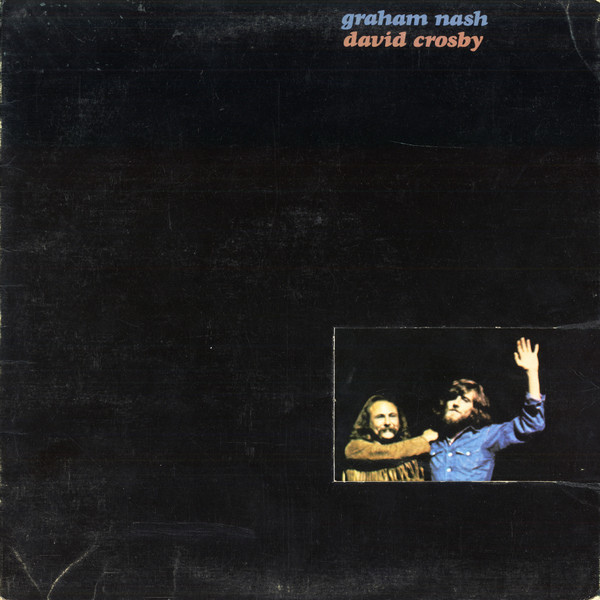
“So go where you will, as long as you think you can, you better watch out, watch out for The Man, anywhere you’re going.”
It’s a bold move. 😀